
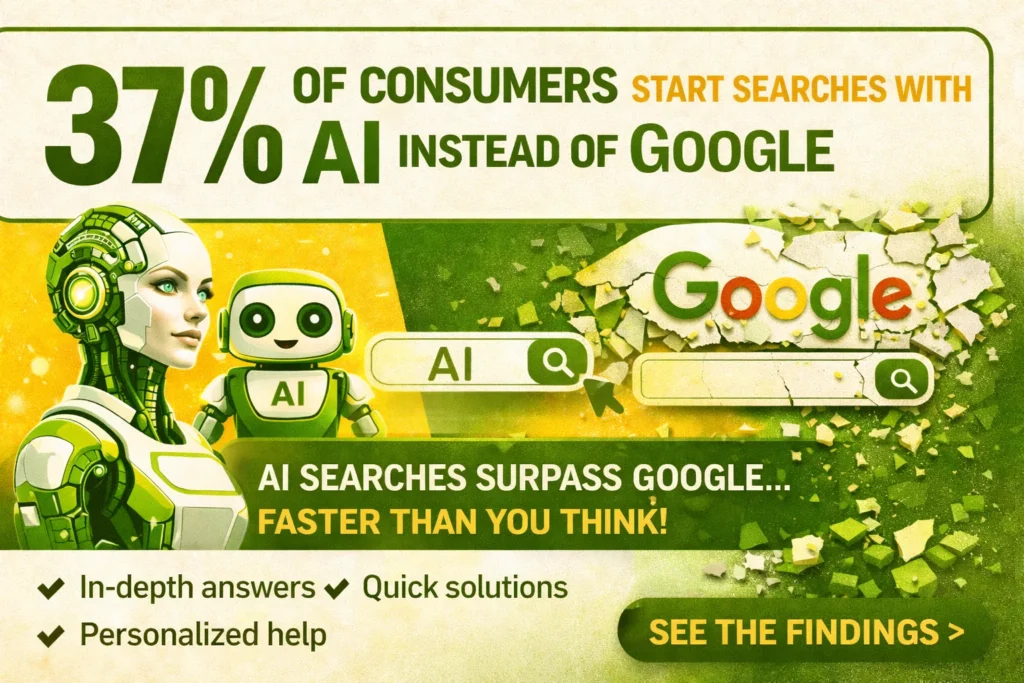
About the survey: Eight Oh Two surveyed 500 active AI users in November to understand how people are using AI, their search habits, trust in AI, brand discovery, and purchase decisions. The study combined multiple-choice, rating-scale, and open-ended questions to provide a clear, forward-looking picture of how search is evolving now and into 2026.The report: 2026 AI and Search Behavior Study (requires registration)
To be honest, this news won’t surprise anyone who follows search trends. If anything, this shift is only going to accelerate. What really stands out is how clearly it confirms what many people already feel: Google has become exhausting. You go in looking for a simple answer and end up wading through ads, over-optimized blog posts, pop-ups, and pages that take forever to get to the point. But AI?…
It feels refreshing by comparison because it cuts through the noise and gives you a direct answer you can actually use. That’s really the heart of this change. People aren’t “ditching Google” because they hate it, they’re just tired of working so hard to get basic information. For most people, AI feels more like asking a smart friend a question than digging through a messy library.
What’s interesting is that trust hasn’t completely shifted yet. Most people still double-check AI answers, especially when it comes to money, health, or major decisions. This shows that AI hasn’t fully replaced search, at least not yet, but it’s clearly on its way, with estimates suggesting it could handle at least 50% of searches by the end of 2026. Expect tools like Gemini and ChatGPT to keep refining answers, moving closer to near-perfect accuracy over time. For now, the typical behavior is simple: people turn to AI for a quick answer first, then use Google to confirm it.
For serious-minded brands that are all about scaling, this is a major wake-up call. Being “number one on Google” is no longer enough if AI doesn’t understand your brand, mention you, or see you as credible. If AI summaries don’t pop up for your business, many users won’t even know you exist, and you get filtered out from the very beginning. Optimizing for AI is really just having a strong, holistic marketing strategy, because its algorithm depends on brand signals. Think of it as AI favoring the brands with the clearest and loudest voice, which means combining SEO, social media, content, and email marketing effectively.
Another important takeaway for undecided founders: AI is quietly shaping opinions! When it hands out a tiny list of recommendations with a confident little explanation, people take it seriously even if they don’t realize it. First impressions are now happening inside AI answers, not search results pages. And you know what they say about first impressions… yep, they stick.
The smart move going forward isn’t choosing between AI or Google. It’s making sure you have a holistic marketing plan that helps your brand show up clearly and consistently in both. AI gives the overview, Google provides the proof. If those two don’t match, users will lose confidence fast.
In simple terms:
AI is where people start thinking.
Search engines are where they validate decisions.
Brands that understand this, and adapt early, will have a serious edge over the ones still playing by old SEO-only rules.
You Migh Also Like: Health Experts Flag Issues in Google’s AI Overviews for Medical Searches